
Te Matuku Marine Reserve

Te Matuku Bay
Waiheke’s Wild, Protected Estuary
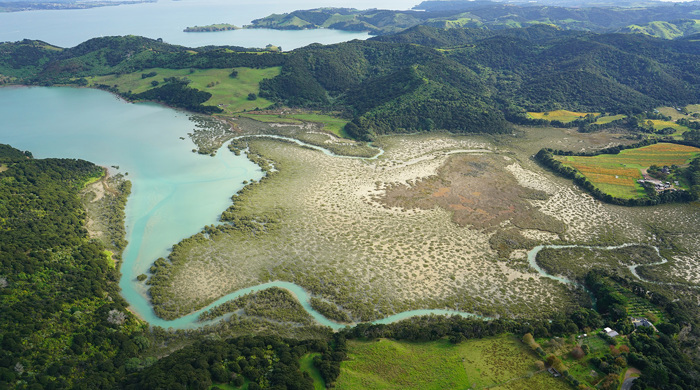
Established in 2003, Te Matuku Marine Reserve encompasses approximately 690 hectares of protected marine and coastal environments. Located on the southeastern coast of Waiheke Island, it includes Te Matuku Bay, one of the island's largest and least disturbed estuaries, as well as adjacent areas extending into the Waiheke Channel.
Ecological Significance
The reserve boasts a diverse range of habitats, including:RNZ+8boats.co.nz+8New Zealand Government Documents+8
Saltmarshes and mangroves: Providing crucial breeding grounds for fish and bird species.
Intertidal mudflats: Rich in invertebrates like sea snails, cockles, crabs, and worms, supporting wading birds at low tide.
Shell spits and tidal creeks: Offering nesting sites for endangered birds such as the New Zealand dotterel and the Australasian bittern.
Rocky shorelines and deeper channels: Habitat for marine life including juvenile snapper, trevally, rig (spotted dogfish), and flatfish.
This continuity from freshwater wetlands to marine environments is rare in the Auckland region and underscores the reserve's ecological importance. New Zealand Government Documents
Wildlife
Te Matuku Marine Reserve is a haven for both resident and migratory bird species. Notable birds include:
New Zealand dotterel: A nationally vulnerable species that breeds on the reserve's shell spits.
Australasian bittern (matuku-hūrepo): A rare wetland bird occasionally seen in the area.
Bar-tailed godwit and South Island oystercatcher: Migratory birds that utilize the mudflats for feeding.Land, Air, Water Aotearoa (LAWA)
Spotless crake and banded rail: Secretive wetland birds inhabiting the reserve's marshes.
The surrounding forests also support native birds like kererū, tūī, and pīwakawaka (fantail).
Conservation and Regulations
As a marine reserve, Te Matuku is a no-take zone. Activities such as fishing, shellfish gathering, and disturbing marine life are strictly prohibited to preserve the area's ecological integrity.
Visitors are encouraged to:
Avoid walking on mudflats: To protect sensitive habitats and species.
Refrain from anchoring on tidal flats: To prevent damage to fragile intertidal organisms.New Zealand Government Documents
Respect wildlife: Maintain a safe distance from nesting birds and other animals.
Any illegal activities or disturbances should be reported to the Department of Conservation (DOC) via their hotline: 0800 DOC HOT (0800 362 468).
Recreation and Access
While extractive activities are banned, the reserve offers various recreational opportunities:
Kayaking and paddleboarding: Exploring the estuary and coastline.
Birdwatching and photography: Observing diverse bird species in their natural habitats.
Swimming: Enjoying the calm waters of the bay.
Access:
By land: Via Orapiu Road, leading to Otakawhe Bay, a suitable launch point for kayaks.
By sea: Boaters can navigate to the reserve, but must be cautious of tidal conditions and avoid anchoring on sensitive areas.
Maps and Resources
For detailed information:
DOC's Te Matuku Marine Reserve page: New Zealand Government Documents
Interactive map and GPS boundaries: New Zealand Government Documents
Auckland marine reserves brochure: New Zealand Government Documents
Te Matuku Marine Reserve stands as a vital sanctuary preserving the unique coastal and marine ecosystems of Waiheke Island. Its rich biodiversity, cultural significance, and recreational offerings make it an invaluable asset worthy of its own dedicated webpage to educate and inspire conservation efforts.

Paddle Boarding in Te Matuku Bay